
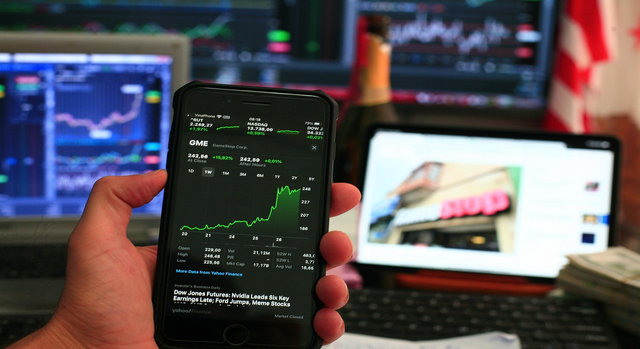
Swing trading is a popular strategy among stock market enthusiasts seeking to capitalize on short- to medium-term price movements. Unlike day trading, which involves buying and selling within the same trading day, swing trading focuses on holding positions for several days to weeks. This approach allows traders to take advantage of market swings and potentially maximize profits.
In this article, we'll explore swing trading strategies that work, offering insights, practical tips, and common pitfalls to avoid. Whether you're a beginner or a seasoned trader, understanding these strategies can enhance your trading performance and decision-making process.
Understanding the Basics of Swing Trading
Swing trading involves holding a stock for a period ranging from a few days to several weeks in order to profit from expected price changes or 'swings.' One of the key aspects of swing trading is analyzing market trends to predict future price movements.
The stock market is inherently volatile, and this volatility creates opportunities for swing traders. By understanding technical analysis, swing traders can make informed decisions about when to enter and exit trades, a crucial aspect of swing trading strategies that work.
Technical analysis involves studying price charts and using various indicators to identify potential market trends. Some popular indicators used in swing trading include moving averages, relative strength index (RSI), and Bollinger Bands. These tools help traders make educated guesses about future price movements.
Developing Effective Swing Trading Strategies
Creating successful swing trading strategies requires a blend of technical analysis, market knowledge, and disciplined execution. Key elements include identifying the right stocks, setting entry and exit points, and managing risk effectively.
One approach is to focus on stocks with high liquidity, as these stocks tend to have more predictable price movements. Additionally, it's important to understand the broader market context, as overall market trends can impact individual stock performance.
Key Components of a Swing Trading Plan
Having a well-structured trading plan is essential for success in swing trading. Here are some core components to consider:
- Stock Selection: Choose stocks with sufficient volume and volatility to ensure potential for price swings.
- Technical Indicators: Use indicators like moving averages, RSI, and MACD to identify entry and exit points.
- Risk Management: Set stop-loss orders to limit potential losses and determine position sizes based on risk tolerance.
- Time Horizon: Define the duration you'll hold a position, which can vary depending on the strategy and market conditions.
- Review and Adjust: Regularly review your trades and adjust your strategies based on performance and changing market conditions.
Moreover, having a checklist can streamline the decision-making process:
- Identify potential stocks based on liquidity and volatility.
- Analyze technical indicators for entry and exit points.
- Set stop-loss and take-profit levels.
- Review market conditions and adjust the strategy as needed.
- Keep a trading journal to document and learn from each trade.
Common Mistakes to Avoid in Swing Trading
While swing trading can be profitable, it's not without its challenges. Many traders fall into common traps that can lead to significant losses. Avoiding these pitfalls is crucial for implementing swing trading strategies that work effectively.
One common mistake is not having a clear trading plan. Without defined entry and exit points, traders may react emotionally to market fluctuations, leading to poor decision-making. Another mistake is neglecting risk management. Failing to set stop-loss levels can result in devastating losses if the market moves against you.
Additionally, over-reliance on a single technical indicator can be detrimental. It's important to use a combination of indicators to get a more comprehensive view of market trends. Finally, ignoring broader market conditions can lead to missed opportunities or unexpected losses, as individual stock performance is often influenced by overall market trends.
Advanced Techniques in Swing Trading
For traders looking to refine their swing trading strategies, advanced techniques can provide an edge in the stock market. These methods often involve more sophisticated analysis and require a deeper understanding of market dynamics.
One advanced technique is the use of multiple time frame analysis. This involves looking at charts over different time periods to get a more nuanced view of potential price movements. By analyzing short-term and long-term trends, traders can make more informed decisions.
Another technique is the integration of fundamental analysis with technical analysis. While technical analysis focuses on price movements and patterns, fundamental analysis considers the underlying financial health of a company. Combining these approaches can provide a more holistic view of a stock's potential.
FAQs on Advanced Swing Trading Techniques
To further explore these advanced techniques, here are some frequently asked questions:
- What is multiple time frame analysis? This technique involves using charts from different time frames to identify consistent trends across various periods.
- How can fundamental analysis enhance swing trading? By understanding a company's financial health, traders can make more informed decisions, especially during earnings announcements or economic changes.
- Can advanced techniques be applied to all types of stocks? While they can be applied broadly, their effectiveness may vary depending on a stock's characteristics and market conditions.
Using Technology to Enhance Swing Trading
In today's digital age, technology plays a pivotal role in enhancing swing trading strategies. From advanced charting tools to algorithmic trading systems, technology offers a range of solutions to improve trading efficiency and accuracy.
Traders can leverage sophisticated software to automate certain aspects of trading, such as executing trades based on pre-defined criteria. This automation reduces the impact of emotions on trading decisions, ensuring a more disciplined approach.
Moreover, technology provides access to vast amounts of real-time data, enabling traders to stay informed about market developments. By utilizing technology effectively, traders can refine their swing trading strategies and improve their decision-making process.
FAQs on Technology in Swing Trading
Here are some common questions about using technology in swing trading:
- What are the benefits of algorithmic trading? Algorithmic trading can execute trades faster and more accurately than manual trading, reducing the influence of emotions.
- How can traders ensure they are using reliable trading software? It's crucial to research and choose reputable software providers. Reading reviews and seeking recommendations can also help.
- Is technology necessary for successful swing trading? While not mandatory, technology can significantly enhance trading efficiency and help traders stay competitive in the fast-paced stock market.
As swing trading continues to gain popularity, understanding and applying effective strategies can greatly impact your success. By avoiding common pitfalls and leveraging advanced techniques and technology, traders can develop swing trading strategies that work, maximizing their potential for success in the ever-evolving stock market.